

Table of Contents
- What Makes Artist Designed Clothing Different From Mass-Produced Fashion
- Fabric Quality and Textile Construction: The Foundation of Durability
- Print Durability: How Screen Printing, Direct-to-Garment, and Hand-Painted Methods Hold Up
- Quality Indicators in Custom Clothing: What to Check Before You Buy
- How to Wash Artist Designed Clothing Without Damaging the Art
- How to Care for Wearable Art: Long-Term Maintenance and Repair
- The Investment Value of Artist Designed Clothing: Cost, Longevity, and Slow Fashion
- Conclusion
- Frequently Asked Questions
Last Updated: September 16, 2026
What Makes Artist Designed Clothing Different From Mass-Produced Fashion
Artist designed clothing is apparel where the print, dye, or construction originates from an individual artist's original work rather than a licensed graphic or trend-driven design brief. That distinction changes how the garment is made, how long it lasts, and how you care for it.
At JRStudio, we produce wearable art from the original paintings of Janet Richardson, MFA, and the question we hear most is practical: will it hold up?

Fabric Quality and Textile Construction: The Foundation of Durability
Fabric quality is the single largest predictor of how long any printed garment will last, because a print can only be as stable as the surface it sits on. A heavier, tighter knit resists the stretching and abrasion that crack print films and fade dyes.
Fiber Strength: Why Ring-Spun Cotton and Heavyweight Blends Last Longer
Ring-spun cotton is twisted and thinned repeatedly during spinning, producing a smoother, stronger yarn than standard open-end cotton, with better resistance to pilling and tearing.
Stitching and Seam Integrity: Double-Needle vs. Single-Stitch Construction
Double-needle stitching runs two parallel rows of thread at stress points like hems, shoulders, and necklines, distributing tension so a single broken stitch does not unravel a whole seam.
Print Durability: How Screen Printing, Direct-to-Garment, and Hand-Painted Methods Hold Up
Print method determines how the artwork ages. Screen printing lays a thick ink layer that can crack if stretched; direct-to-garment (DTG) bonds ink into the fibers and fades gradually; hand-painted work varies most, depending on pigment and heat-setting.
| Method | Feel on Fabric | Typical Weak Point | Care Sensitivity |
|---|---|---|---|
| Screen printing | Thick, raised ink | Cracking along folds | High heat, harsh detergent |
| Direct-to-garment | Soft, sits in fibers | Gradual color fade | Wash temperature |
| Hand-painted | Variable, often stiff | Pigment flaking | Abrasion, hot water |
Quality Indicators in Custom Clothing: What to Check Before You Buy
Quality indicators in custom clothing are the physical details you can verify before purchase: stated fabric weight, seam type, print method, and care labeling. None of these require trusting the marketing copy.
Run through this checklist on any artist-made piece:
- Fabric weight is stated in oz/yd² and sits at 6 oz or above for a tee
- Double-needle stitching is specified at hems and shoulders
- Print method is named (screen print, DTG, or hand-painted), not just "printed"
- Care instructions are listed with a specific maximum wash temperature
- The garment is pre-shrunk, which prevents the artwork from distorting after the first wash
- A sewn-in label is present rather than a printed neck tag that will fade
How to Wash Artist Designed Clothing Without Damaging the Art
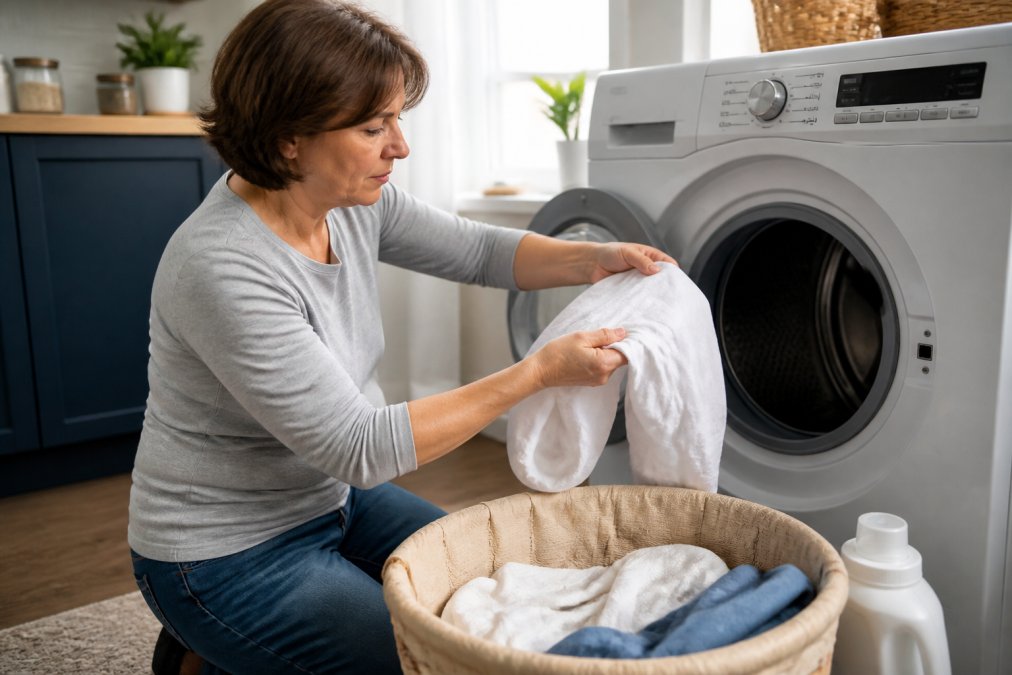
Washing artist designed clothing safely comes down to three habits: turn it inside out, use cool water, and skip the dryer. Those steps prevent most print cracking, fading, and seam stress.
Inside-Out Washing, Cool Water, and Air Drying: The Core Routine
Turning the garment inside out puts fabric between the print and everything else in the drum, eliminating most of the mechanical abrasion that wears artwork down.
Follow this sequence:
- Turn the piece inside out and close any zippers on the garment or other items in the load.
- Wash on a cold cycle, no higher than 30°C (90°F), on a gentle setting.
- Use a mild detergent and skip bleach and fabric softener entirely.
- Reshape the garment and lay it flat or hang it to air dry, away from direct sun.
- If you must use a dryer, choose the lowest heat setting and remove the piece while slightly damp.
How to Care for Wearable Art: Long-Term Maintenance and Repair
Long-term care for wearable art is less about special products and more about catching small damage early: a loose seam or lifting print edge is a five-minute fix if you address it, and an unwearable garment if you don't. The durability advantage comes from knowing how to repair each print type before damage becomes permanent.
A Repair Guide by Print Method
Different print methods fail in different ways, so the repair must match the method, the wrong fix can make damage worse.
Walk for Peace T-Shirt — Monk Art →
Seam and Fabric Repair
- Split side or shoulder seam: A whip stitch with matching all-purpose polyester thread restores the seam without altering fit. Backstitch the first and last three stitches to lock the repair.
- Stretched neckline: A row of elastic thread run through the inside of the collar rib with a wide zigzag stitch pulls the rib back to shape. This works on ribbed collars; it does not work on a self-fabric (non-ribbed) neckline.
- Small holes in knit cotton: A duplicate stitch, re-creating the knit loop pattern with a blunt needle and matching yarn, is invisible on solid colors and far more durable than an iron-on patch, which stiffens the surrounding fabric and eventually lifts.
- Pilling: A fabric shaver or a fine-tooth comb removes surface pills without cutting into the knit. Do not pull pills off by hand; it drags fibers and thins the fabric.
Storage and Rotation
Store folded rather than hung where possible, hanging a heavy cotton tee by the shoulders for months stretches the neckline and distorts the print. For hand-painted or heavily embellished pieces, fold with acid-free tissue between the print and the next garment to prevent pigment abrading against a zipper or button.
Keep a small repair kit with the garment: matching thread, a blunt tapestry needle, fray-check, and a textile adhesive. A repair done the day you notice the damage takes minutes; the same repair a month later often requires replacing the whole seam.
When to Retire a Piece
Some damage is not worth repairing. If a print has cracked across more than roughly a third of its surface, the fabric has thinned to transparency at the underarms, or a seam has failed in three or more places, the garment has reached the end of its wearable life. The slow-fashion move is to repurpose it, a framed panel of the artwork, a quilt square, or a patch on another garment, rather than send it to a landfill.
The Investment Value of Artist Designed Clothing: Cost, Longevity, and Slow Fashion
The investment case for artist designed clothing rests on cost per wear, not sticker price. A garment that survives several years of regular rotation costs less per wear than three cheap replacements, and it holds a design nobody else is wearing.
A Pre-Purchase Durability Grade
Score each piece on the four factors below. A piece that scores well on all four is a genuine investment; a piece that scores well on only one is a gamble.
Reading the Cost-Per-Wear Math
You do not need exact numbers to make the comparison useful. A heavyweight, double-needle, pre-shrunk tee worn twice a week for three years delivers roughly 300 wears, while a lightweight promotional tee on the same schedule shows collar and underarm failure within a year, roughly 100 wears, and gets demoted to a sleep shirt. The heavier piece costs more up front but delivers three times the wear life: the entire slow-fashion argument in one comparison.
What Actually Destroys the Investment
The biggest threat to cost per wear is not the purchase price, it is the hot dryer. High heat makes the ink film expand faster than the cotton beneath it, producing the hairline cracks you see across old band tees, and a piece that would have delivered 300 wears can lose a third of its life to one season of hot tumble drying.
The Slow-Fashion Case, Stated Plainly
Slow fashion is not about buying less for its own sake; it is about buying pieces whose construction you can verify, then maintaining them so cost per wear falls every year you own them. An original design on a heavyweight, double-needle, pre-shrunk cotton tee is built to be worn, not preserved in a drawer.
Conclusion
The real challenge with artist-made apparel isn't the art, it's knowing which pieces were built to last and which only look the part. Check the fabric weight, stitch type, and print method before you buy, then wash cold, inside out, and air dry.
Frequently Asked Questions
Does artist-designed clothing require special laundry care?
Most artist designed clothing benefits from the same care as any quality garment: wash inside-out in cool water (max 30C or 90F), avoid bleach, and tumble dry on low or air dry. These steps protect print adhesion and fiber strength. For hand-painted pieces, check the artist's specific instructions, since some textile art requires gentle hand-washing to preserve the handwork.
How can you tell if a graphic print on clothing will last?
Check the print method and fabric quality. Screen printing on heavyweight ring-spun cotton tends to outlast direct-to-garment prints on thin fabric because the ink bonds more deeply with dense fibers. Look for double-needle stitching, pre-shrunk fabric, and garment-dyed construction. A heavyweight tee (around 6.1 oz/yd²) with reinforced seams will hold its shape and print through many wash cycles.
Is artist-designed clothing considered slow fashion?
Yes, in most cases. Artist designed clothing aligns with slow fashion principles because it is produced in smaller batches, uses sustainable materials where possible, and prioritizes craftsmanship over volume. Unlike fast fashion, these pieces are designed to be kept and worn for years. The emphasis on ethical production and unique design means each garment carries more intentionality than mass-produced alternatives.
What should I look for in the stitching of artist-designed garments?
Double-needle stitching at the hems and shoulders is a strong durability indicator. Tubular knit construction (no side seams) helps the garment retain its shape after repeated wash cycles. Check that seams are flat and even with no loose threads. Reinforced necklines and sewn-in labels rather than printed tags also signal better construction and longer garment longevity.