

Table of Contents
- Artist Canvas Prints vs. Paper Prints: Which Lasts and Looks Better?
- What Drives the Price of Artist Canvas Prints?
- Canvas Print Durability and Care: How Long Will It Last?
- How to Choose Wall Art for Your Home
- Framing vs. Gallery Wrap: Which Finish Fits Your Space?
- Are Artist Canvas Prints Worth It? The Honest Verdict
- Conclusion
- Frequently Asked Questions
Last Updated: September 22, 2026
Artist Canvas Prints vs. Paper Prints: Which Lasts and Looks Better?
Artist canvas prints are reproductions of original artwork printed onto coated cotton or polyester canvas and stretched over a wooden frame, while paper prints are images printed onto flat sheets of paper. Canvas prints generally last longer and resist fading better when displayed without glass, but paper prints hold finer photographic detail and cost less upfront. At JRStudio, every canvas print starts from an original work by Janet Richardson, MFA, and the difference shows the moment you unwrap one.
Texture is where canvas pulls ahead. A canvas weave gives a painting surface a slight tooth, so brushwork reads with real visual depth instead of sitting flat behind glass. Paper prints look crisp and smooth, which suits photographic detail, but they can't replicate that tactile, gallery-wrap quality.
The trade-off is cost and care. Paper prints usually need a frame and glass to survive long term, and glass adds cost and glare. Canvas arrives ready to hang, needs no glazing, and shrugs off everyday bumps.
Texture, Depth, and the Gallery-Wrap Look
The gallery wrap is the single biggest aesthetic reason to choose canvas. In a gallery wrap, the image wraps around the edges of the frame, so the piece hangs with no visible border and no need for custom framing. That clean edge reads as intentional and modern, and it works in almost any room.
Canvas also carries matte finishes beautifully. A matte finish scatters light instead of bouncing it, so you avoid the hot spots you get from glossy paper behind glass. For a living room with windows on two walls, that alone can decide the question.
Cost per Year: Framing, Glass, and Replacement
Think in cost per year, not cost at checkout. A paper print often needs a frame and glass to survive, and those extras can rival the print itself. Canvas skips both. A framed matte canvas from JRStudio starts at $29.99, and the American Institute for Conservation guidance on framing and display notes that protective glazing and framing decisions materially affect how long a work survives.
Replace a faded paper print every few years and the cheap option stops being cheap.
What Drives the Price of Artist Canvas Prints?
Four things move the price of a canvas print: the ink and coating, the frame material, the size, and whether the design is original or mass-produced. Archival-quality inks and acid-free materials cost more but resist fading for far longer. Larger sizes use more canvas, more ink, and heavier stretcher bars.
The frame underneath matters more than most buyers realize. Canvas stretchers made from sustainably sourced radial pine hold tension better than cheap alternatives, which keeps the surface from sagging over time. JRStudio's framed canvases use FSC-certified radial pine and UL-certified Greenguard Gold latex inks, which is why a $29.99 to $32.99 piece holds up next to decor that costs several times more.
Original artwork also carries value a mass-produced print never will. You're paying for a specific artist's eye, not a design licensed to thousands of sellers.
Canvas Print Durability and Care: How Long Will It Last?
A properly cared for canvas print can stay vibrant for decades, while an unprotected paper print may show fading within a few years in direct sun. The variables are light, humidity, and how you clean it. UV-resistant inks and a protective coating do most of the work; your habits handle the rest.
Cotton vs. Poly-Blend: The Material That Decides Longevity
Most guides skip this, but the substrate matters as much as the ink. Cotton canvas is absorbent, takes pigment deeply, and ages like fabric, it can yellow slightly over decades but holds texture beautifully. Poly-blend canvas (often a cotton-polyester mix) resists moisture and stretching better and is cheaper to produce, but some blends can develop a slight sheen under certain lighting and are less forgiving if the coating cracks.
For archival work, look for acid-free cotton or a poly-cotton blend labeled archival. Acidic sizing in cheap canvas is a common cause of yellowing and brittleness within a decade. If a listing doesn't say acid-free, assume it isn't.
Cleaning, Sunlight, and Humidity
Dust is the main enemy, and it's easy to handle. Wipe the surface gently with a clean, damp cloth when it gathers dust, and skip sprays and solvents entirely. Those can break down the coating that protects the ink. For deeper grime, a soft dry brush first, then a barely damp cloth, is the safest sequence.
Copy of Abstract Military Figures Matte →
Keep canvas out of direct sunlight. UV resistance slows fading, it doesn't stop it, so a wall that takes hours of direct afternoon sun will dull any print over time. Bathrooms and basements are the other risk: sustained humidity can loosen the canvas from its stretchers. A hallway or living room with normal indoor humidity is ideal.
Why Some Canvas Prints Look Blurry: Resolution and DPI
Color accuracy is the harder problem. Every printer has a color gamut, the range of colors it can reproduce, and no printer matches a screen exactly. A good print shop proofs the file and adjusts for the difference. This is one reason original art reproduced by the artist's own studio tends to look closer to the source than a file uploaded to an anonymous mass-production service.
How to Choose Wall Art for Your Home
Choosing wall art comes down to three checks: scale against the wall, palette against the room, and subject against the people who live there. Get those right and almost any style works. Get scale wrong and even a beautiful piece looks like a stamp on a blank wall.
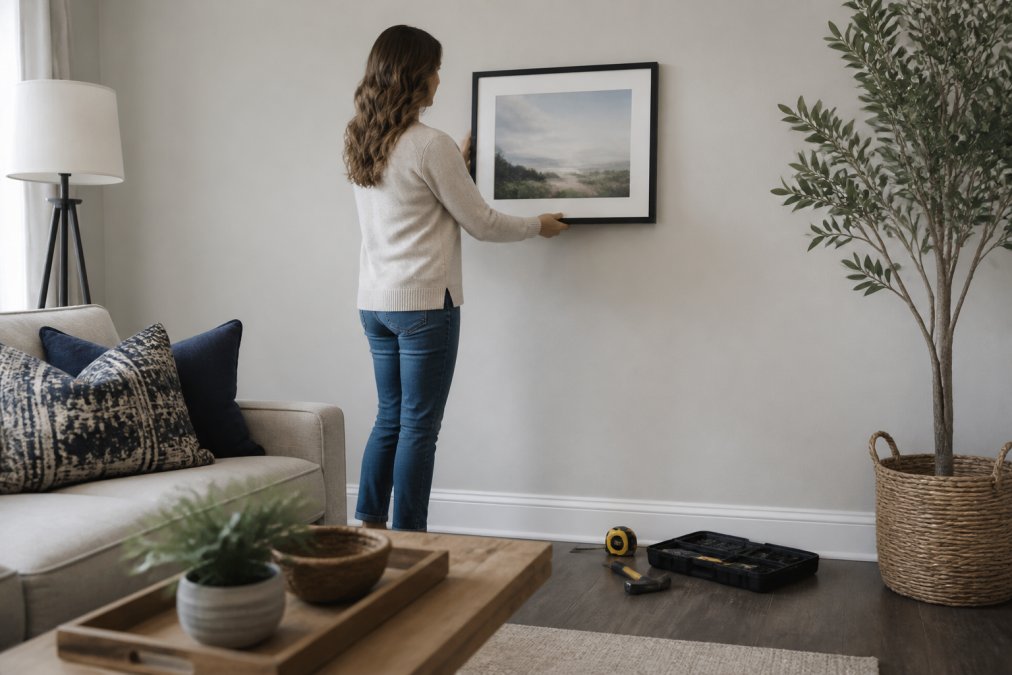
Start with size. A common mistake is buying too small.
Resolution, DPI, and Color Accuracy
Resolution decides how sharp a canvas print looks, and color accuracy decides whether it looks like the original. For canvas, the weave can soften fine detail.
Framing vs. Gallery Wrap: Which Finish Fits Your Space?
Gallery wrap is the better default for most homes, and custom framing is worth the extra cost when you want a formal, traditional look. A gallery wrap wraps the image around the frame with no visible border, which suits modern, minimalist, and transitional interiors. Custom framing adds a visible border and a mat, which suits traditional rooms and pieces you plan to pass down.
| Finish | Look | Best For | Extra Cost |
|---|---|---|---|
| Gallery wrap | Borderless, clean edge | Modern and minimalist rooms | None |
| Slim framed canvas | Thin modern border | Kitchens, hallways, gallery walls | Included in price |
| Custom framed with mat | Formal, traditional | Traditional rooms, heirlooms | Frame plus mat |
Are Artist Canvas Prints Worth It? The Honest Verdict
Artist canvas prints are worth it when you want a durable, ready-to-hang piece with real texture and you're buying from an artist whose work you actually respond to. They're not worth it if you need the cheapest possible wall filler or you're chasing maximum photographic detail in a small size, where paper still wins.

Weigh the alternatives honestly:
- Mass-produced canvas: cheaper upfront, but generic designs and thinner frames that sag sooner.
- Paper prints: sharper fine detail and lower cost, but they need framing and glass to last.
- Original paintings: unmatched depth and resale value, at a much higher price.
Conclusion
The real question isn't whether canvas prints are worth it in the abstract, it's whether the specific piece is worth it to you. A durable print of a design you love, made with archival materials and a solid frame, earns its place on your wall for years.
Frequently Asked Questions
Do canvas prints look cheap or high-quality?
It depends on the canvas and the ink, not the format itself. A stretched cotton-poly canvas with a matte coating and archival inks reads as gallery-quality, while thin glossy canvas on a flimsy frame looks like a poster. Check for UV-resistant latex inks and a solid pine stretcher bar. At JRStudio, framed matte canvas pieces like the Colorful Bell Peppers Still Life use Greenguard Gold latex inks and FSC-certified pine frames, which is the quality signal to look for.
How long do canvas prints typically last?
A well-made canvas print can hold its color for decades indoors. The two things that shorten its life are direct sunlight and damp air, so keep pieces off south-facing walls in strong afternoon light and away from bathrooms or basements. UV-resistant inks and a protective matte coating slow fading. Canvas print durability and care mostly comes down to placement: hang it out of direct sun, dust it gently with a clean damp cloth when needed, and it will outlast most paper prints that yellow behind glass.
Are canvas prints better than framed paper prints?
For wall decor, canvas usually wins on longevity and presence. Paper prints need a frame, mat, and glass, which adds cost, and the glass can glare or break. Canvas arrives stretched and ready to hang with sawtooth hardware, and its woven texture gives the image visual depth that flat paper cannot match. Paper still makes sense for small works on shelves or for pieces you plan to swap often. For a large statement wall, canvas vs paper prints for home decor is not close.
How do I clean and maintain canvas wall art?
Dust is the main enemy, and it is easy to handle. If the canvas gathers dust, wipe it gently with a clean, damp cloth, then let it air dry. Skip sprays, solvents, and scrubbing, which can dull the matte finish or lift the ink. For deeper grime, a soft dry brush first, then the damp cloth. Keep pieces away from kitchen grease and cigarette smoke, and rotate art off walls that get harsh afternoon sun to extend UV resistance.